
Nando Alvarez-Perez: Reviews of CPW Exhibition in Musée & Chronogram
Congratulations to Nando Alvarez-Perez on the thoughtful reviews of Give Me One Good Reason for Leaving the House, curated by Colin Beattie at the Center for Photography at Woodstock (CPW) in Kingston, New York.
The exhibition was featured in both Musée Magazine and Chronogram.
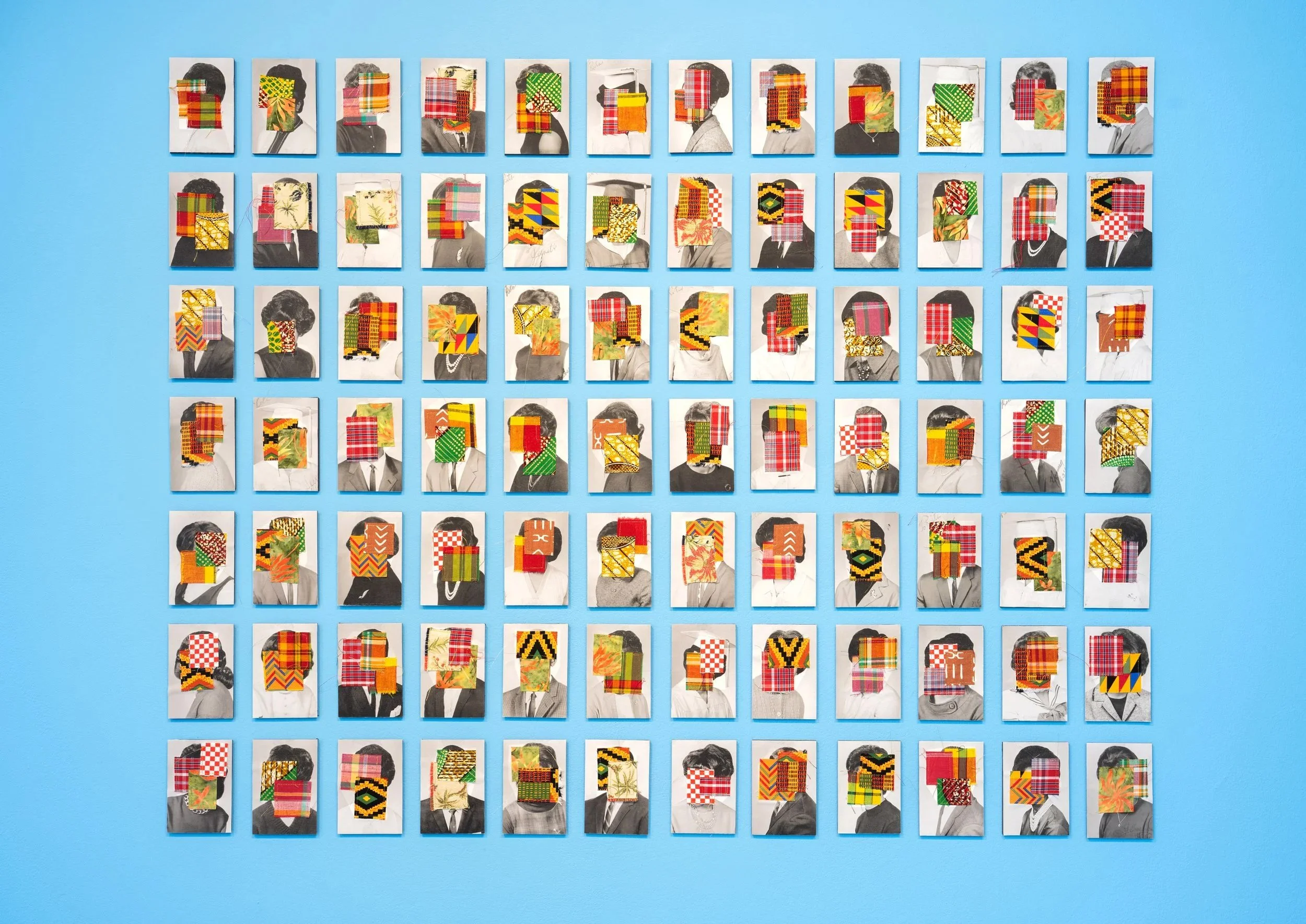
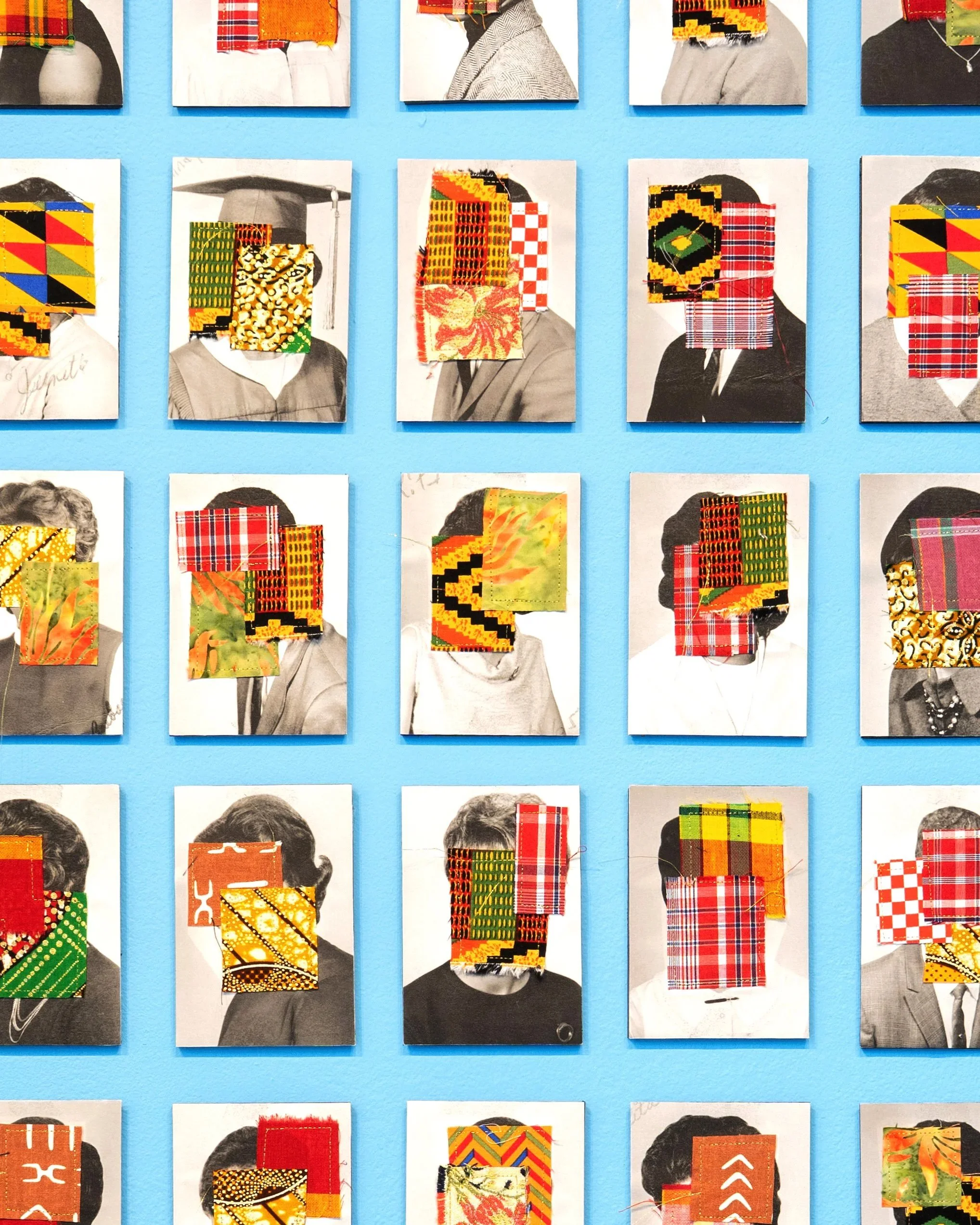
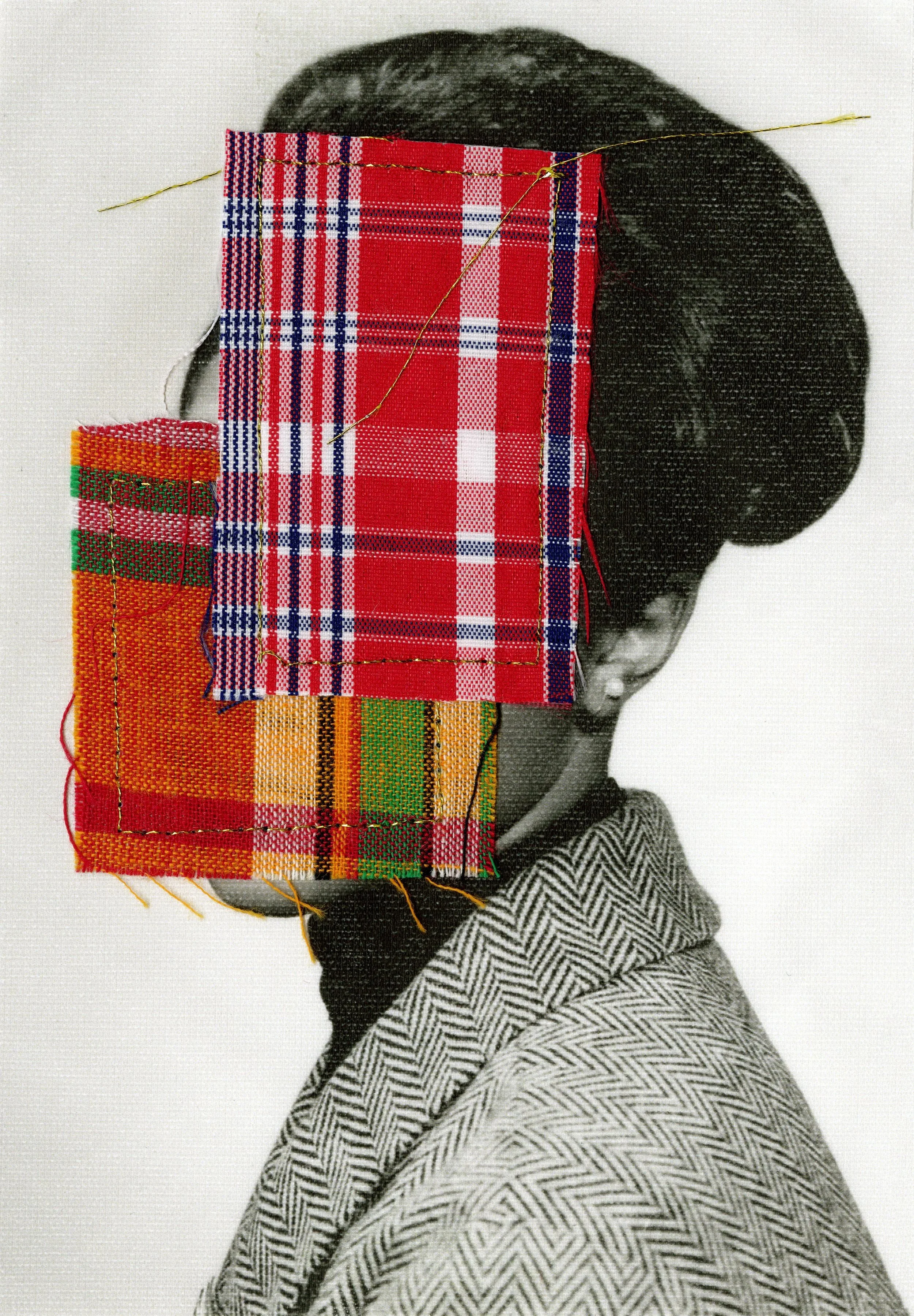
Writing for Musée Magazine, Yulianna Nunno writes that Nando's photographs "draw from found photographs and American iconography, creating a visual amalgamation of the nation."
Written by Yulianna Nunno
Photo Editing by Ayyuce (Jamie) Yesilyurt
Curated by Colin Beattie
The Center for Photography at Woodstock, more recently known as CPW, is a not-for-profit artist-centered organization to develop and promote contemporary photography, located in Kingston, New York.
On view: August 15 - September 6, 2026
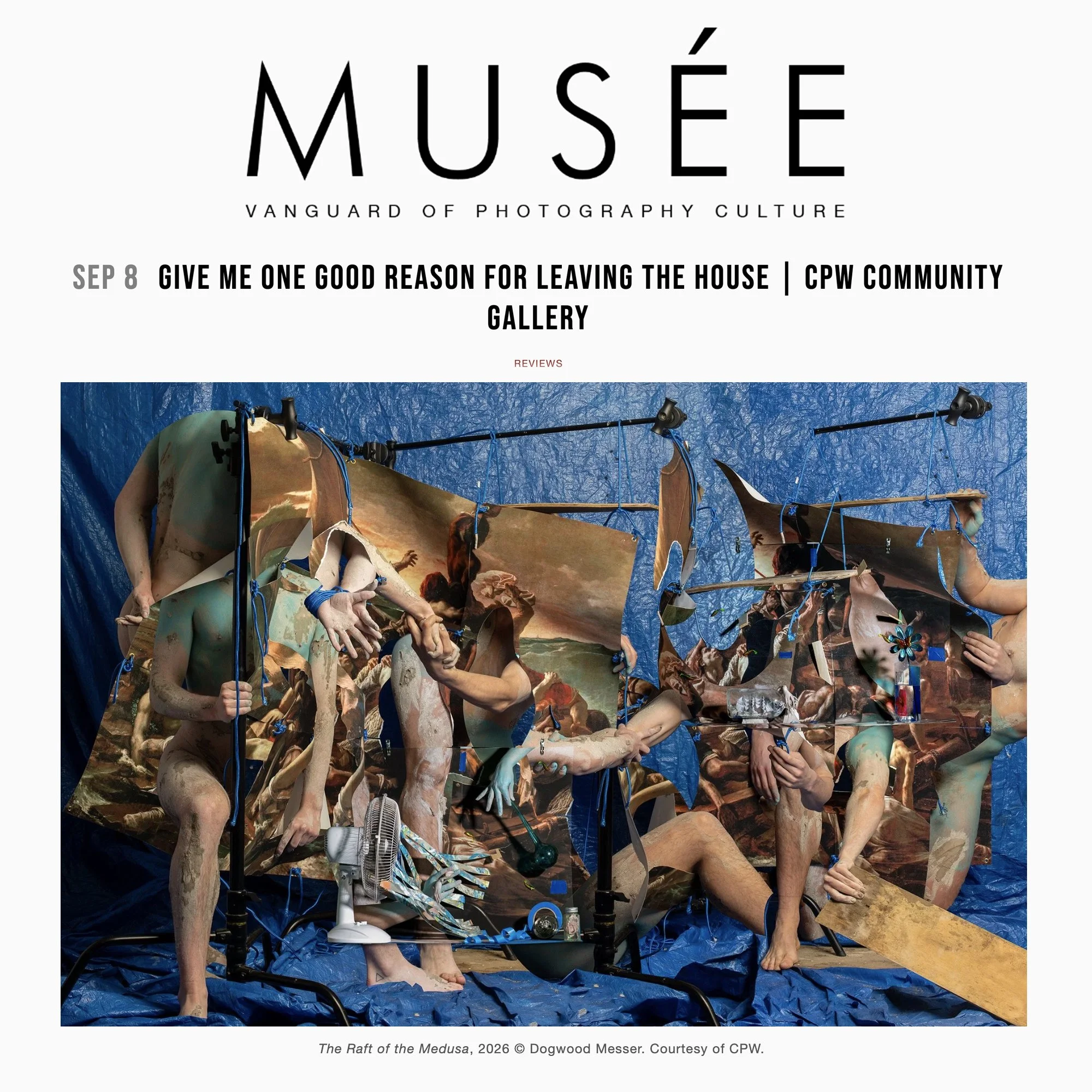
As the saying goes, there is no place quite like home. The word itself brings up visions of warmth and comfort; a refuge when the outside becomes hard to stand. This reflects in the visual codes of home photography, where familial scenes of domesticity tend to dominate. The mood, however, is decisively different in Give Me One Good Reason for Leaving the House, on view now until September 13 at The Center for Photography at Woodstock (CPW). The exhibition brings together works by Nando Alvarez-Perez, Sara de Brito Faustino, Henry Crawley, Robin Crookall, Danielle Ezzo & Marin Sardy, Victoria Manning, Dogwood Messer, Harry Murzyn, Alicia Schirrmeister, Kate Steciw and Kat Thompson. Together, these artists interrogate domesticity, whether that be the rooms where we lay our heads to sleep or the metaphorical state of the nation. Their photographs do not permit viewers the comfortable nostalgia associated with family photo albums. Rather, these images are dominated by a visual language of unease. The longer you look, the more you notice.
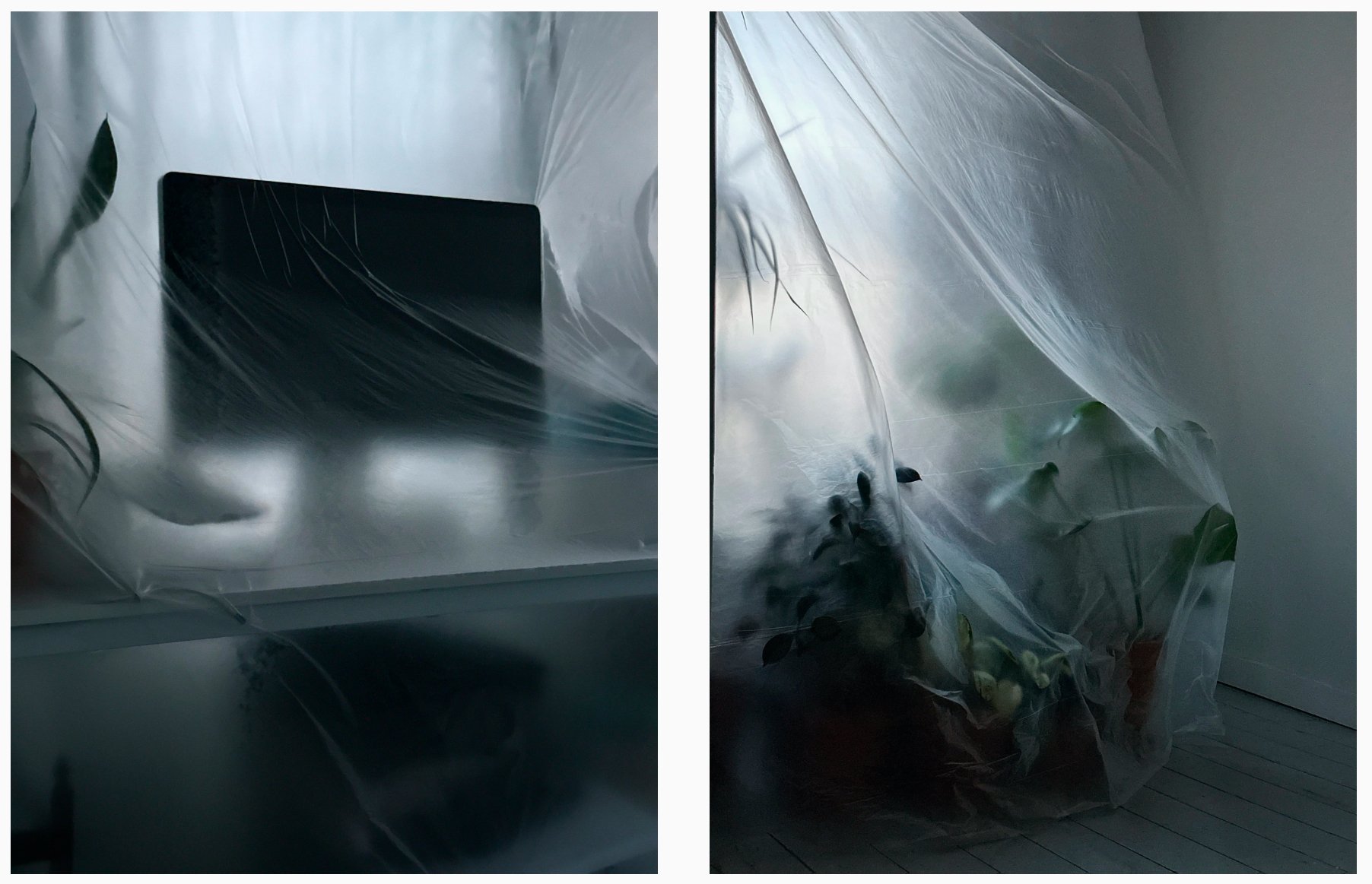
Curator Colin Beattie shared with Musée that the curation process began with Harry Murzyn’s photographs of his home. Murzyn, an architect by trade, picked up the camera to document his working process. His trained sensitivity to architectural form reflects in his photographs, where quotidian scenes transfigure into sacred forms. The diptych “Veil/Shroud” depicts household objects – a computer, plants – beneath a plastic sheet, meant to protect them from construction-related dust. And yet, the light strikes the plastic coverings in such a way that they obtain a spiritual quality. The veil appears to consecrate Murzyn’s space, creating a visual separation between absence and presence, sacred and profane. With this, Murzyn’s study of his own home subverts a commercialized aesthetics of domesticity for one where the home becomes sacred ground.
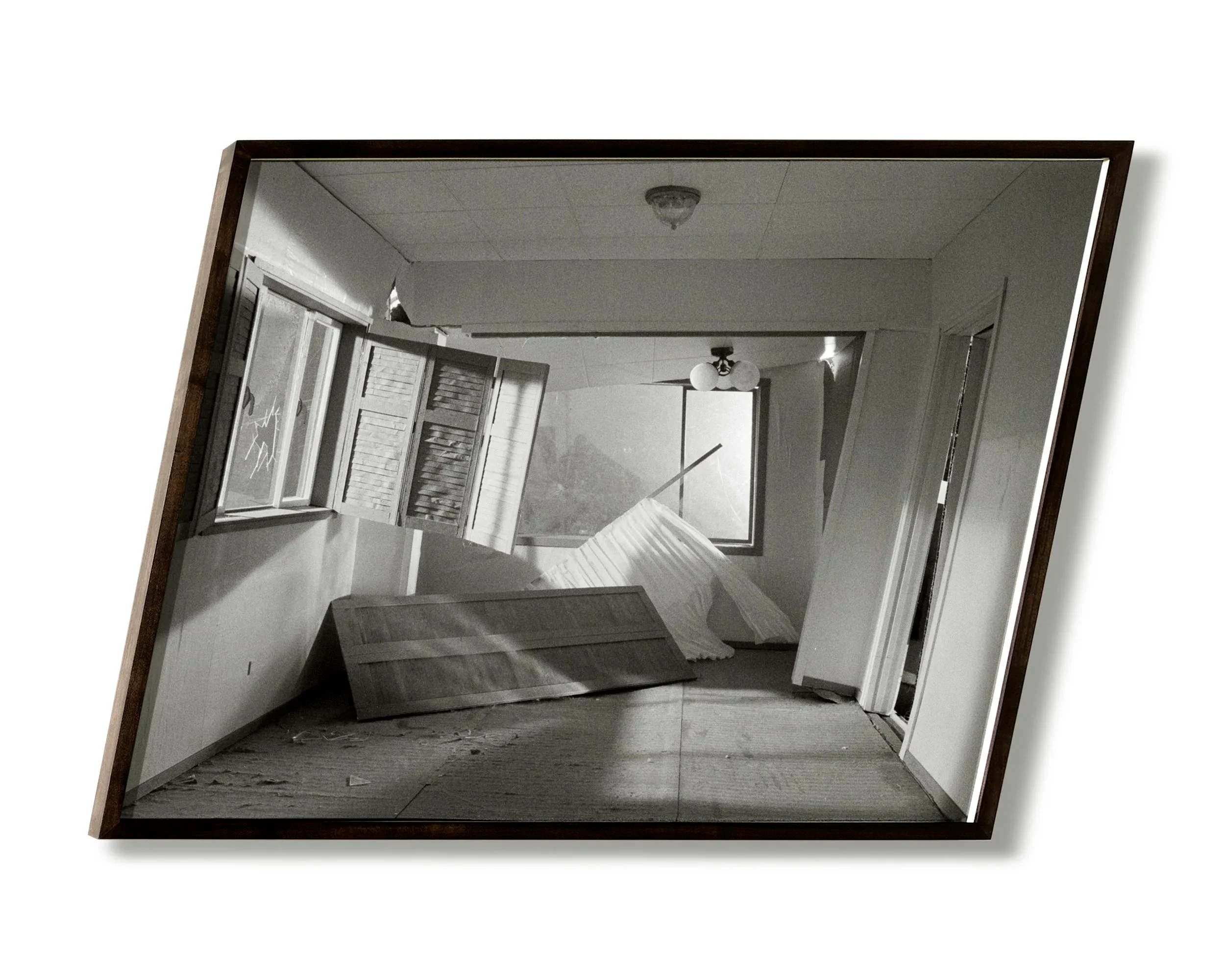
Home, meanwhile, is not what it seems in Robin Crookall’s photographs. Her process blends sculpture and photography, creating scenes which are both familiar and uncanny through photographs of miniature models. The homes Crookall constructs almost look like a place where someone would live, if not for those slight visual signs which throw the viewer off: a lack of furniture, or walls which don’t quite fit together. “After Party” shows a home in ruins, leading viewers down a rabbit hole of imagination to piece together what exactly happened at this party. Of course, the irony is that nothing happened – Crookall merely kicked over her miniature and took a photograph of the outcome.
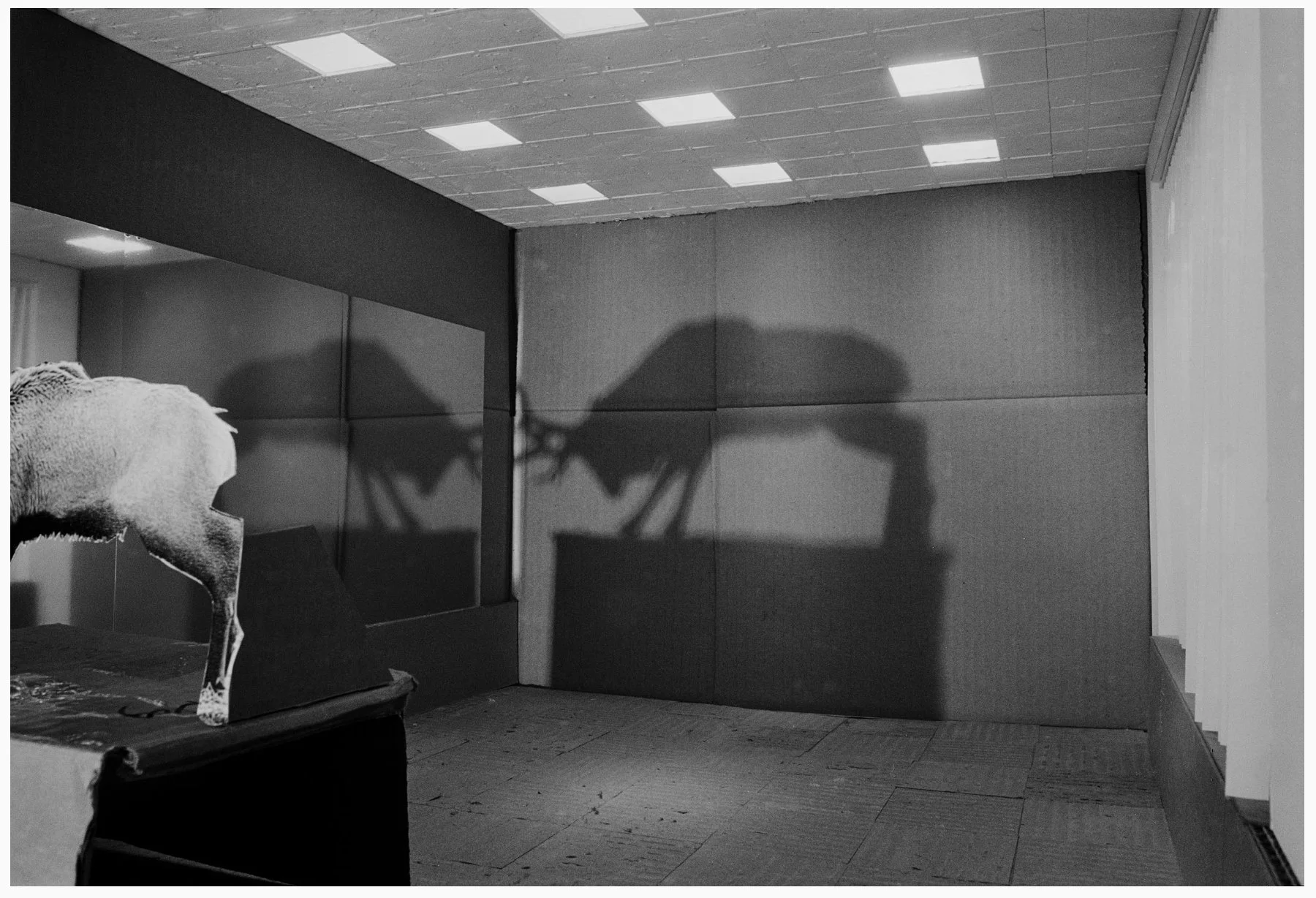
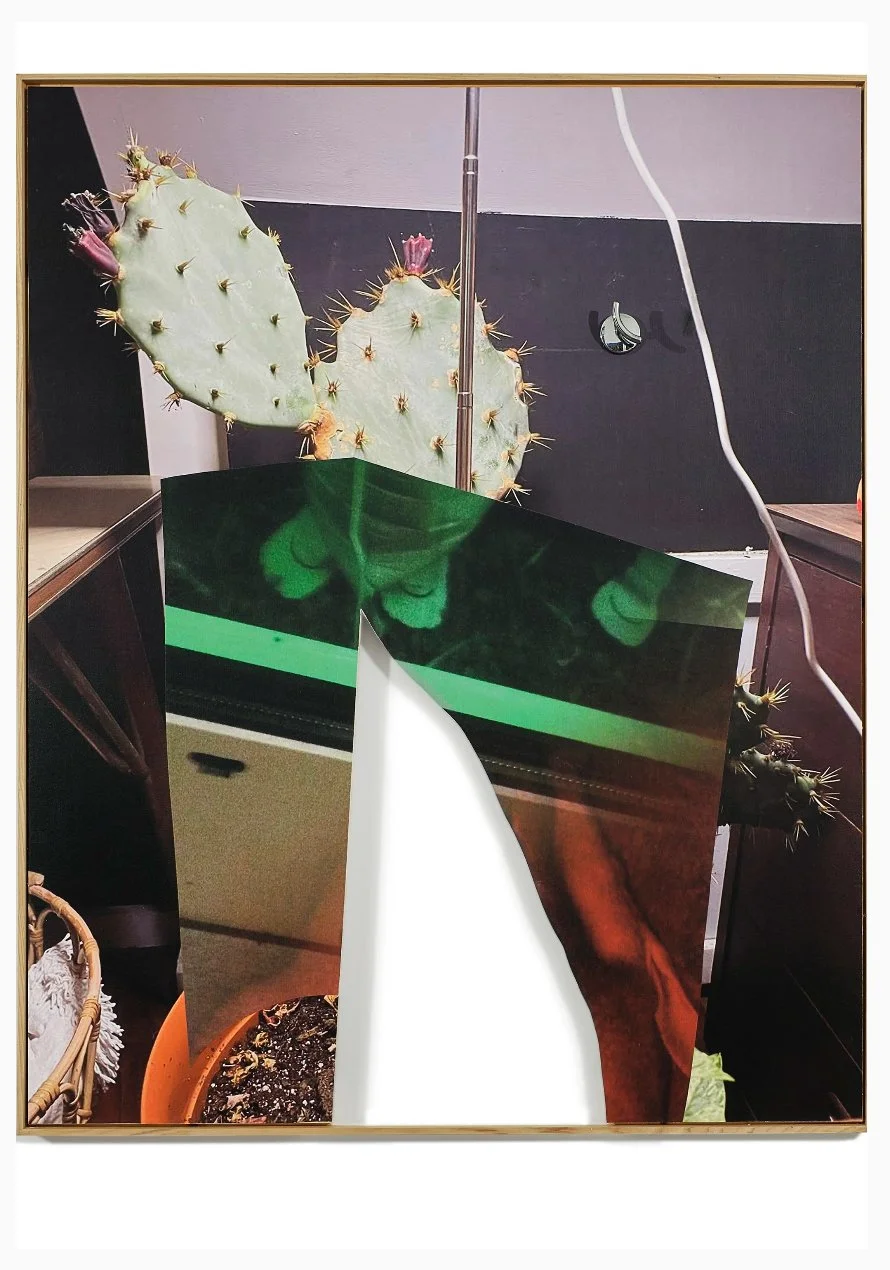
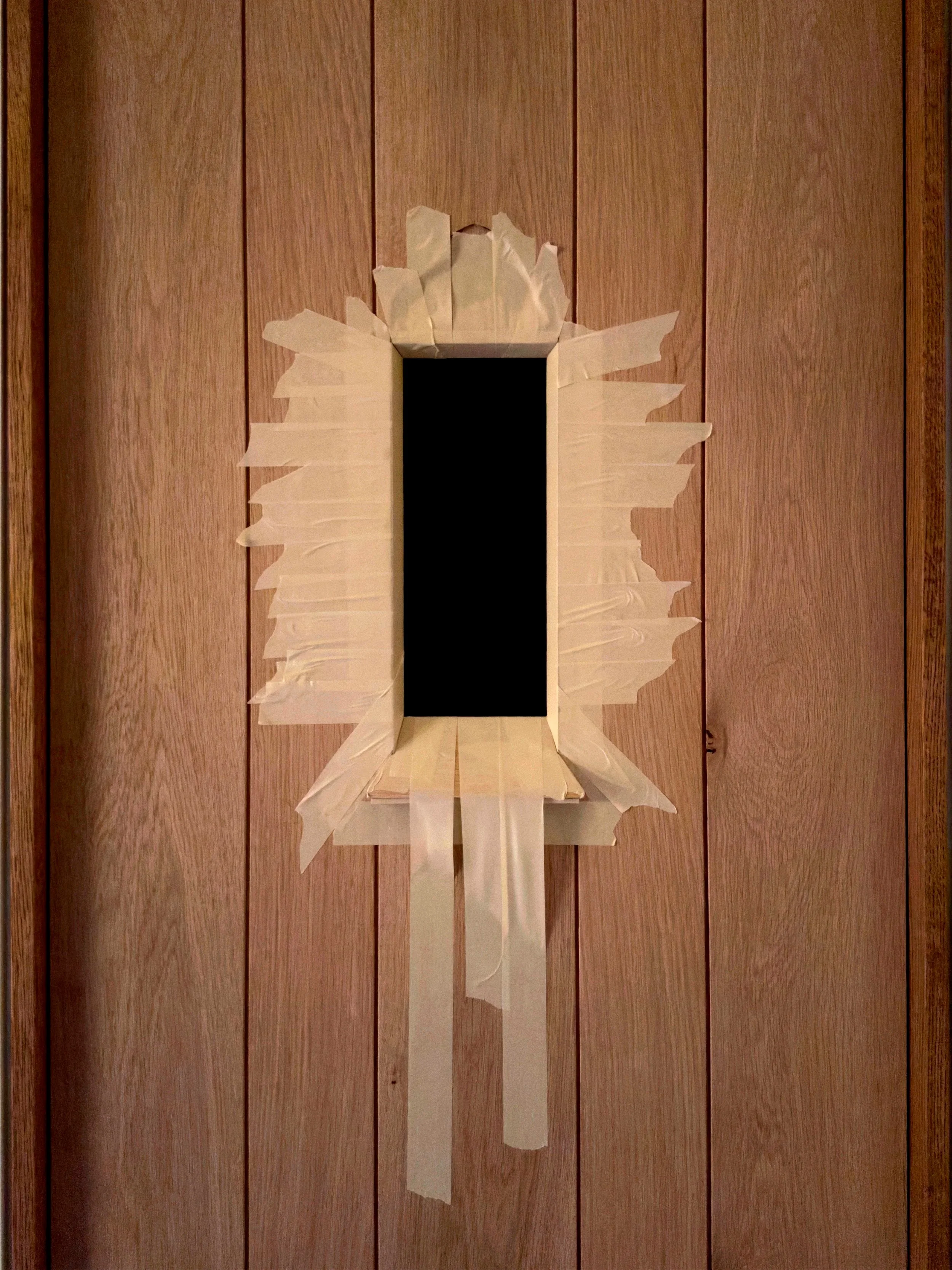
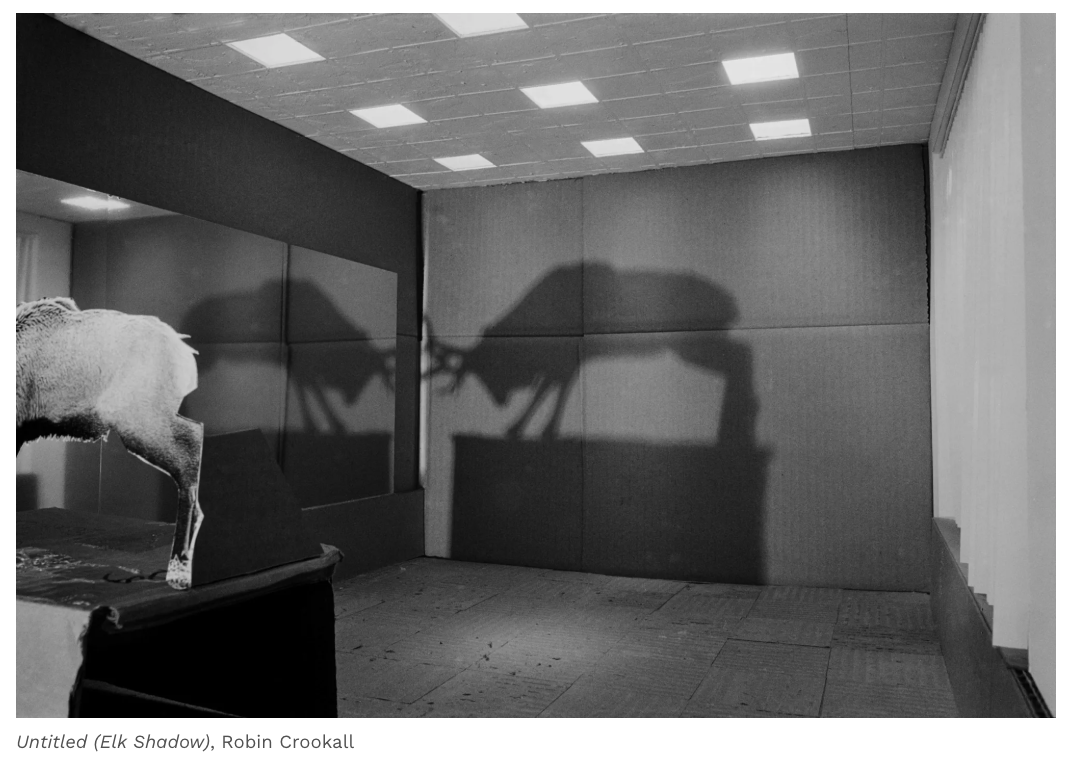
Meanwhile, “Untitled (Elk Shadow)” shows a paper cutout Elk figurine, casting a shadow on the adjacent wall. There is a mirror placed such that the Elk appears to be wrestling with its own shadow. The scene is reminiscent of Plato’s allegory of the cave, which seems to thematically run through Crookall’s use of the photographic medium. In “Untitled (Elk Shadow),” much like “After Party,” viewers are presented with miniatures which – if just momentarily – appear to be proper homes, much like those in Plato’s cave who mistook shadows for reality. Crookall’s approach to photography makes an interesting play at destabilizing a familiar reality, but perhaps this is the point. The familiar visual coding of domesticity might claim to show what authentic home life is like, but these photographs are no less of a construction.
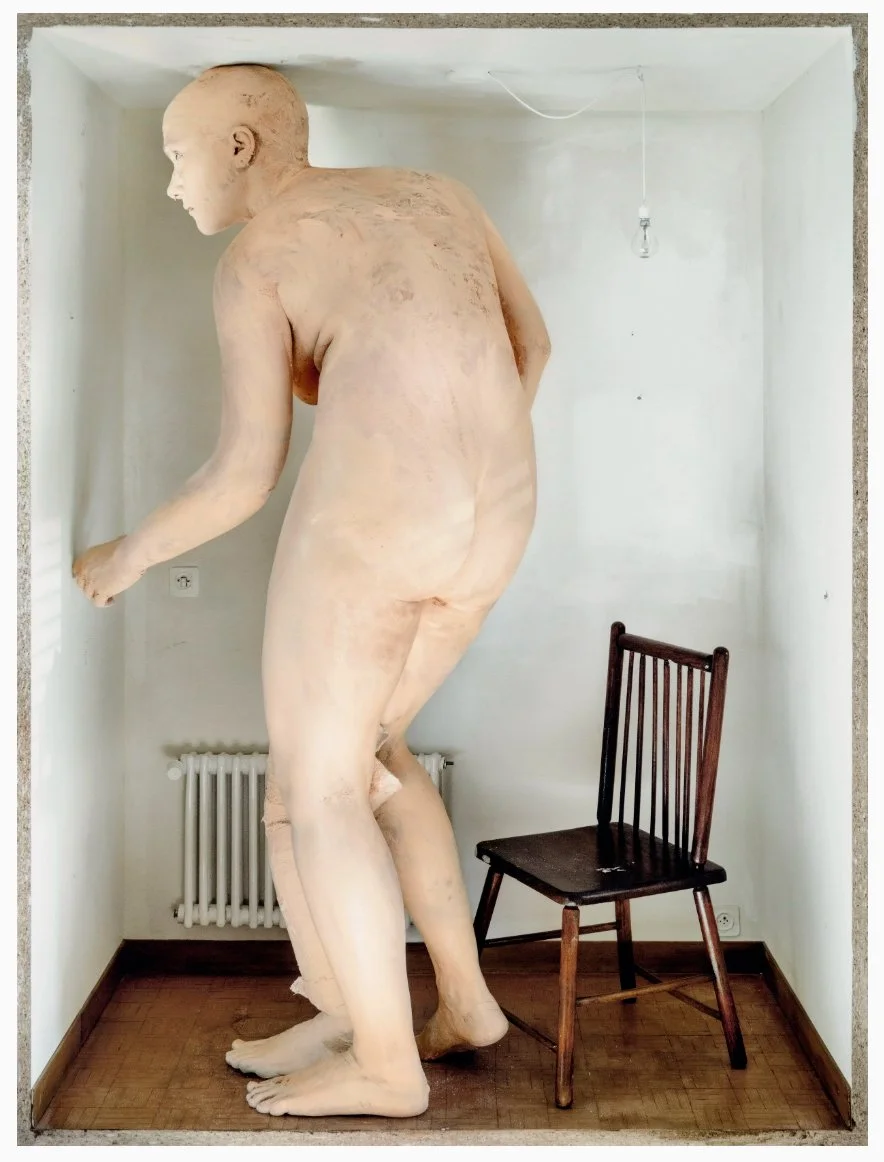
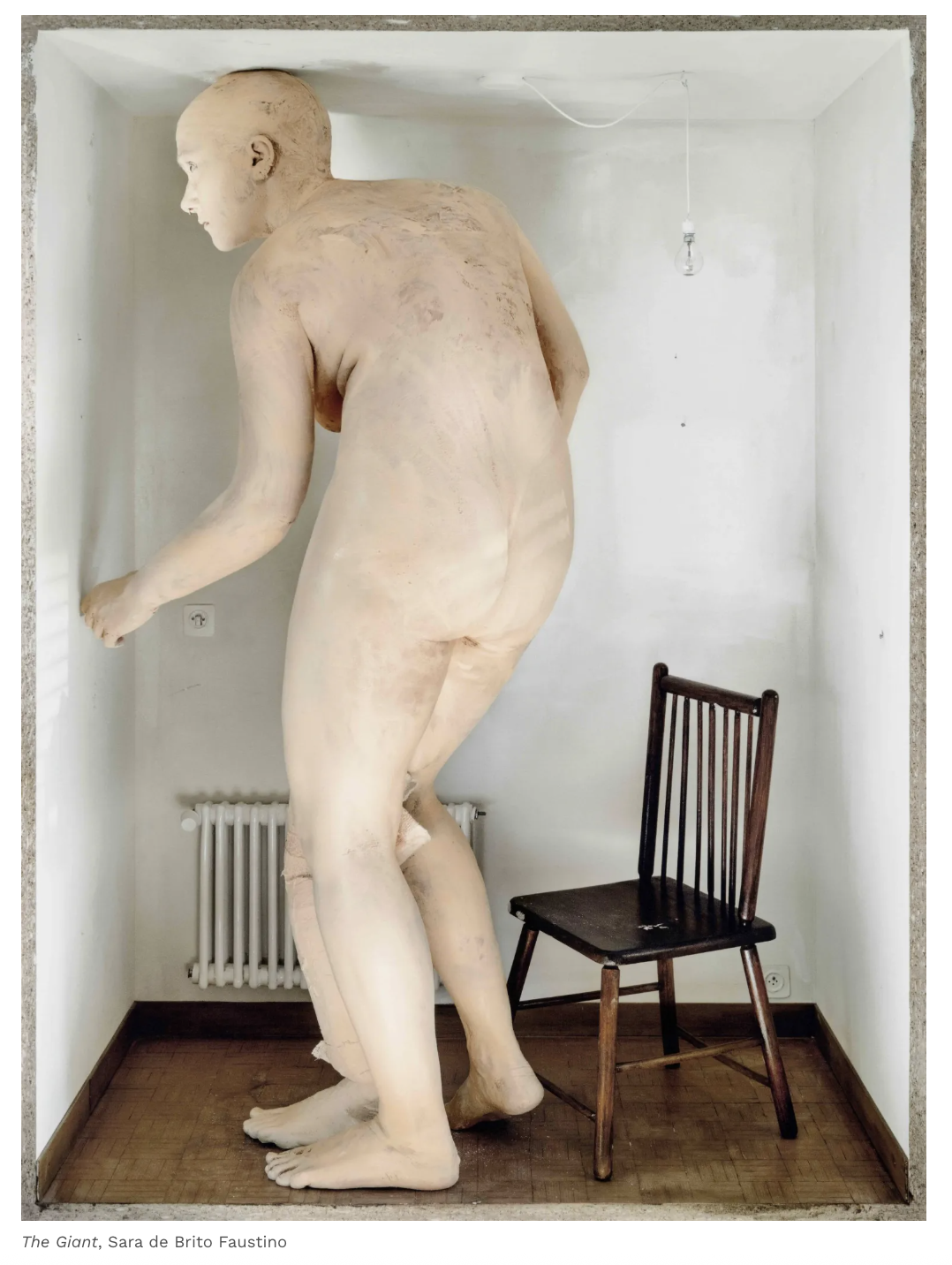
Sara de Brito Faustino’s “The Giant” similarly messes with scale, showing a human figure just slightly too large for the room and its objects. The photograph derives from Faustino’s ongoing project, A Home with No Roof, which reinterprets her own childhood home life. The project uses a 1:15 scale of Faustino’s own home, the figurine serving as a surrogate body for safe exploration of that space. Here, the titular Giant seems trapped by her surroundings, as though something in the home is not quite right. Faustino’s interpretation of home, like Murzyn and Crookall, shows a domesticity which is both familiar and uncertain at the same time.
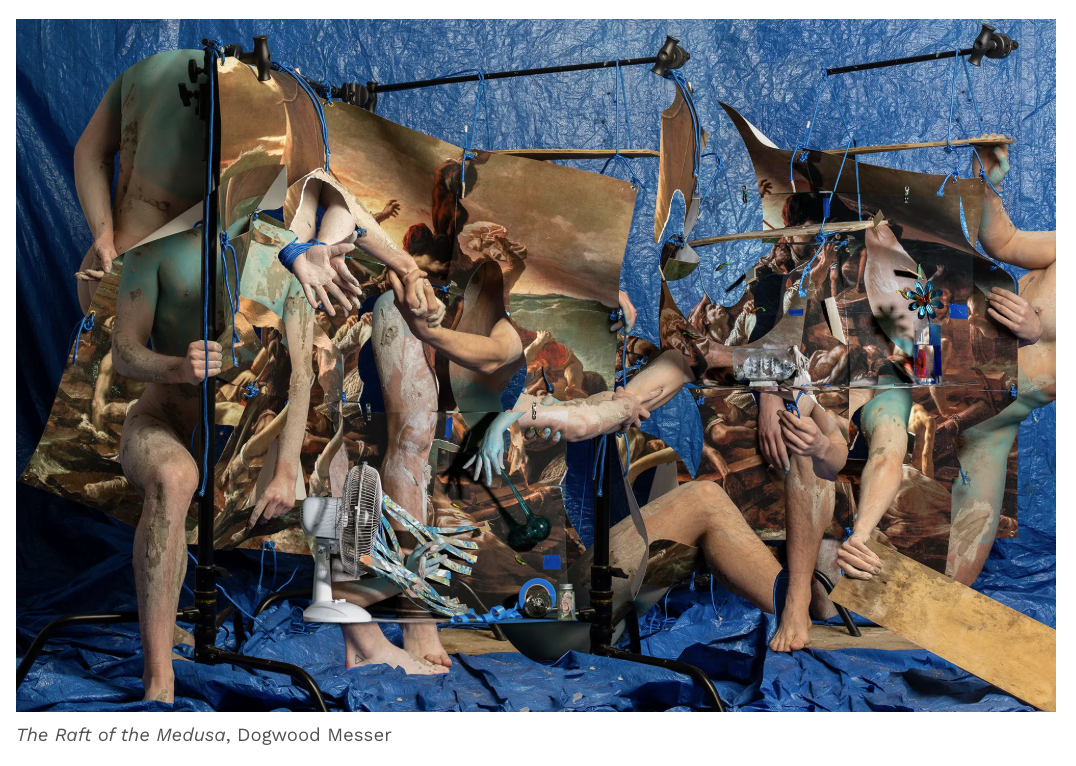
The exhibition is full of unique responses to home life. Photographs by Kate Steciw, Henry Crawley and Nando Alvarez-Perez are reminiscent of the algorithmic deluge brought into our private spaces through our phone screens: Steciw reorganizes objects from Facebook Marketplace listings into collages; Crawley visualizes a domestic culture of overconsumption, creating eerie images flung with detritus; while Perez draws from found photographs and American iconography, creating a visual amalgamation of the nation. Themes of memory emerge in Dogwood Messer, Alicia Schirrmeister and Victoria Manning’s photographs; while Kat Thompson’s work engages with diaspora and belonging. Danielle Ezzo & Marin Sardy round out the exhibition with their uncanny visualizations of paranormal encounters.
Together, these photographers articulate a different visual language for the idea of home. Rather than invoke an idealized aesthetics of tranquility and warmth, these photographs behave as unusual visual objects. They make you want to look twice, and with each closer look, home life takes on new and uncertain dimensions.
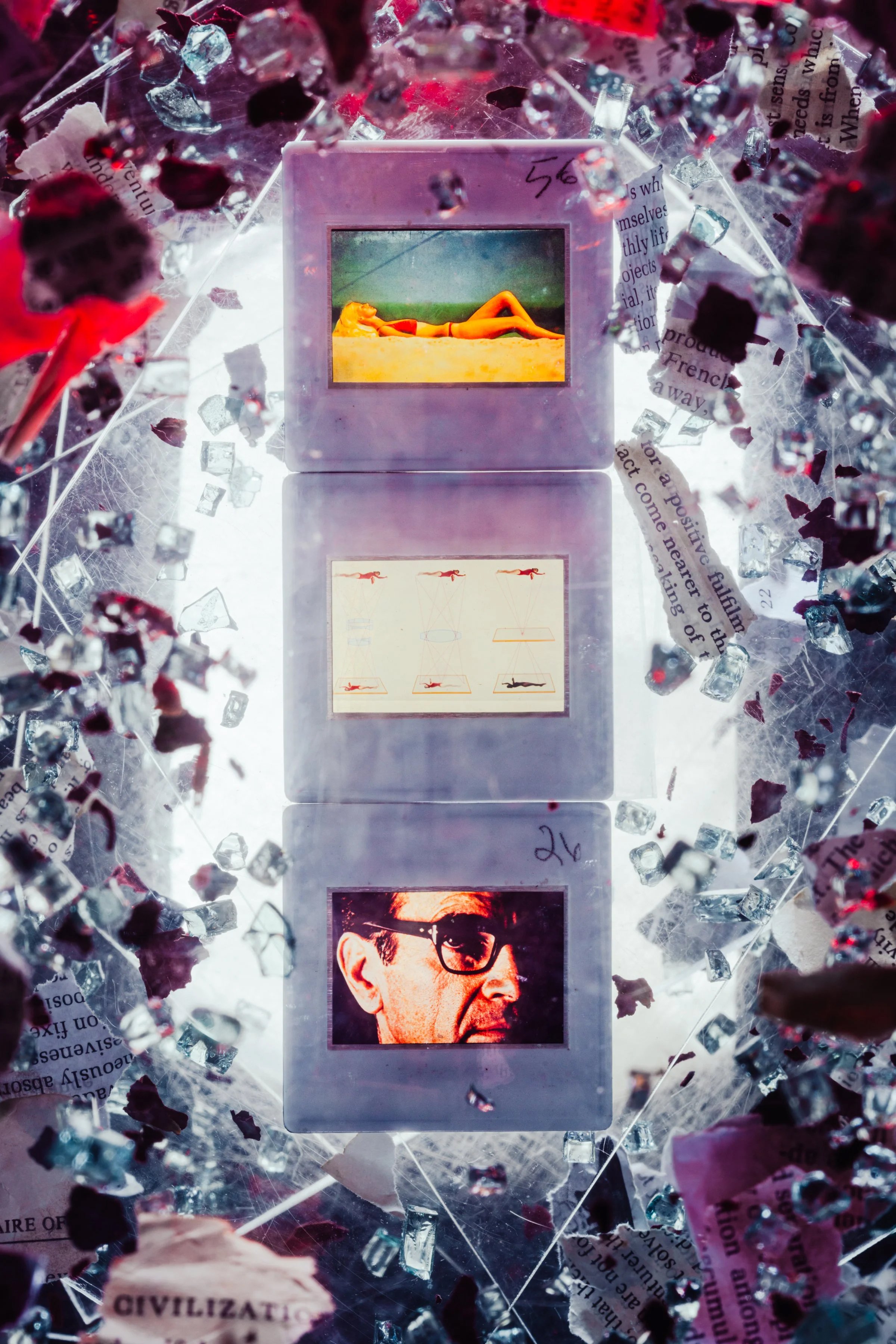
PD081924b (Bad Infinity), 2025 © Nando Alvarez-Perez. Courtesy of the artist and Rivalry Projects
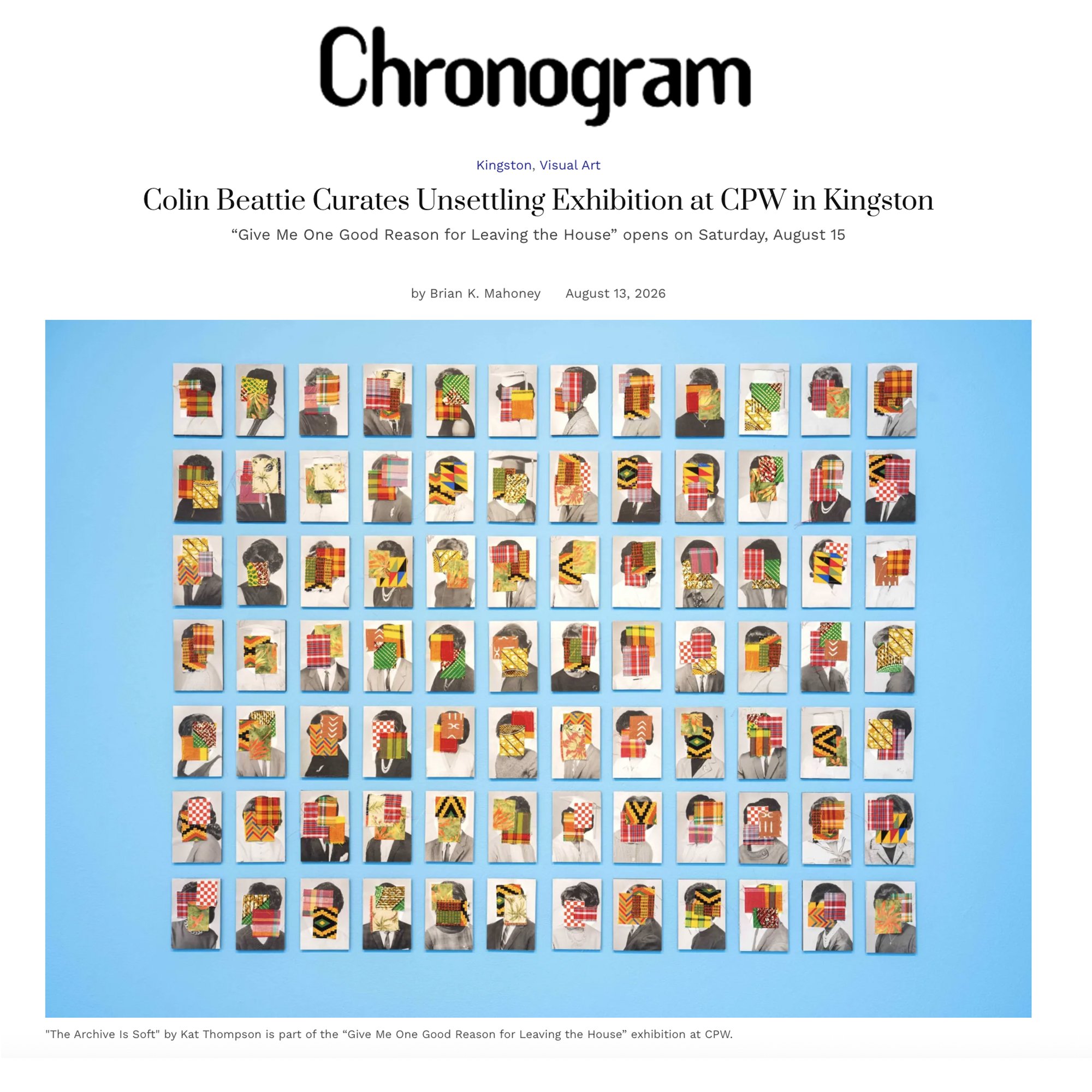
Written by Brian K. Mahoney
August 13, 2026
In Terry Zwigoff’s 1994 documentary Crumb, cartoonist Robert Crumb’s reclusive brother Charles is asked whether medication might help him get out of the house more often. Charles answers with a question of his own: “Give me one good reason for leaving the house.”
The line gives Colin Beattie’s new exhibition at the CPW in Kingston its title and its darkly comic premise. Opening August 15 in CPW’s Community Gallery, “Give Me One Good Reason for Leaving the House” brings together 12 artists whose work examines the home as sanctuary, trap, construction site, repository of memory, and conduit for the chaos outside its walls.
“There’s a double-edged sword to the life of a shut-in,” Beattie says. “Your home looks safe and feels safe. But wouldn’t staying home all the time ultimately be kind of bad for you? The shelter offered in that exchange might actually conceal a threat.”
The exhibition began taking shape while Beattie was organizing “LIFE, STILL,” the 13-photographer group show he curated at ADS Warehouse in Newburgh last summer. One participating artist received a speeding ticket and felt she needed to “lay low” afterward. Meanwhile, Beattie was struggling to secure insurance for the exhibition. The experiences got him thinking about how much risk artists assume simply to participate in cultural life—particularly in a country where an illness, accident, or unexpected expense can derail a person’s finances.
At the same time, he encountered the work of Harry Murzyn, whose photographs documented the renovation of his home during the unraveling of his marriage. Murzyn could make an ordinary kitchen “look very ghostly and unreal,” Beattie says. The photographs suggested that the place we retreat to for protection may itself become destabilizing.
That premise expands beyond the literal household. For Beattie, the home also serves as a metaphor for the United States, a nation continually assuring its inhabitants of their security while rewriting its history to accommodate current political agendas.
“It keeps telling us that it is the safest and best place,” he says, “but it might actually be a threat. That’s the big anchor—the feeling I have of living in a country that feels maybe less and less safe to me, despite assurances to the contrary.”
Beattie, an artist and independent curator who lives in New Hamburg and keeps a studio in Poughkeepsie, arrived at that argument through the artwork. He doesn’t begin with a fixed theme and search for images that illustrate it. He maintains a database of some 400 artists, gathered through an ongoing trawl of websites, social media, and recommendations. He initially spends only 30 or 40 seconds looking at each artist, saving anything that stops him.
Once works begin accumulating, he looks for the conversations taking place among them. “I start pulling together a lot of work that, in its first stage, I don’t even know what it has to do with the other work,” he says. “Then, once I get to 10 or 11 or 12 things, I start to pull the theme out.”
In “Give Me One Good Reason,” familiar domestic spaces repeatedly slip into the uncanny. Swiss artist Sara de Brito Faustino’s The Giant, being exhibited in North America for the first time, depicts an immense human figure compressed inside a room that cannot contain her. The image will appear as an eight-by-four-foot exhibition print. Kate Steciw draws imagery from Facebook Marketplace listings, entering strangers’ homes through photographs of objects offered for sale and reworking them into collages and sculptures. Murzyn’s renovation pictures transform the labor of remaking a house into a record of a life coming apart.
The exhibition also includes work by Nando Alvarez-Perez, Henry Crawley, Robin Crookall, Danielle Ezzo, Victoria Manning, Dogwood Messer, Alicia Schirrmeister, Marin Sardy, and Kat Thompson.
Throughout the show, photography wavers between evidence and fabrication. That instability is central to Beattie’s interest in the medium. Long before generative AI made image manipulation a daily anxiety, photographs were shaping desire, directing commerce, and presenting selective versions of reality as fact. The artists in this exhibition interrupt that frictionless exchange.
“They’re gumming up or jamming the role that photographs play in the conveyance of information,” Beattie says. Their images resist the instant readability of advertising and social media, forcing viewers to slow down and notice how visual information works on them.
Beattie considers the participants artists who use cameras, with photography functioning as one tool among sculpture, collage, set construction, performance, and writing. Their work draws freely from cathedral architecture, religious painting, Surrealism, and conceptual art. What connects them is an attempt to preserve a sense of self amid a barrage of images, advertisements, political messaging, and increasingly unstable information.
“Give Me One Good Reason for Leaving the House” opens with a reception on August 15 from 3 to 5pm at CPW, 25 Dederick Street in Kingston, and remains on view through September 13.